
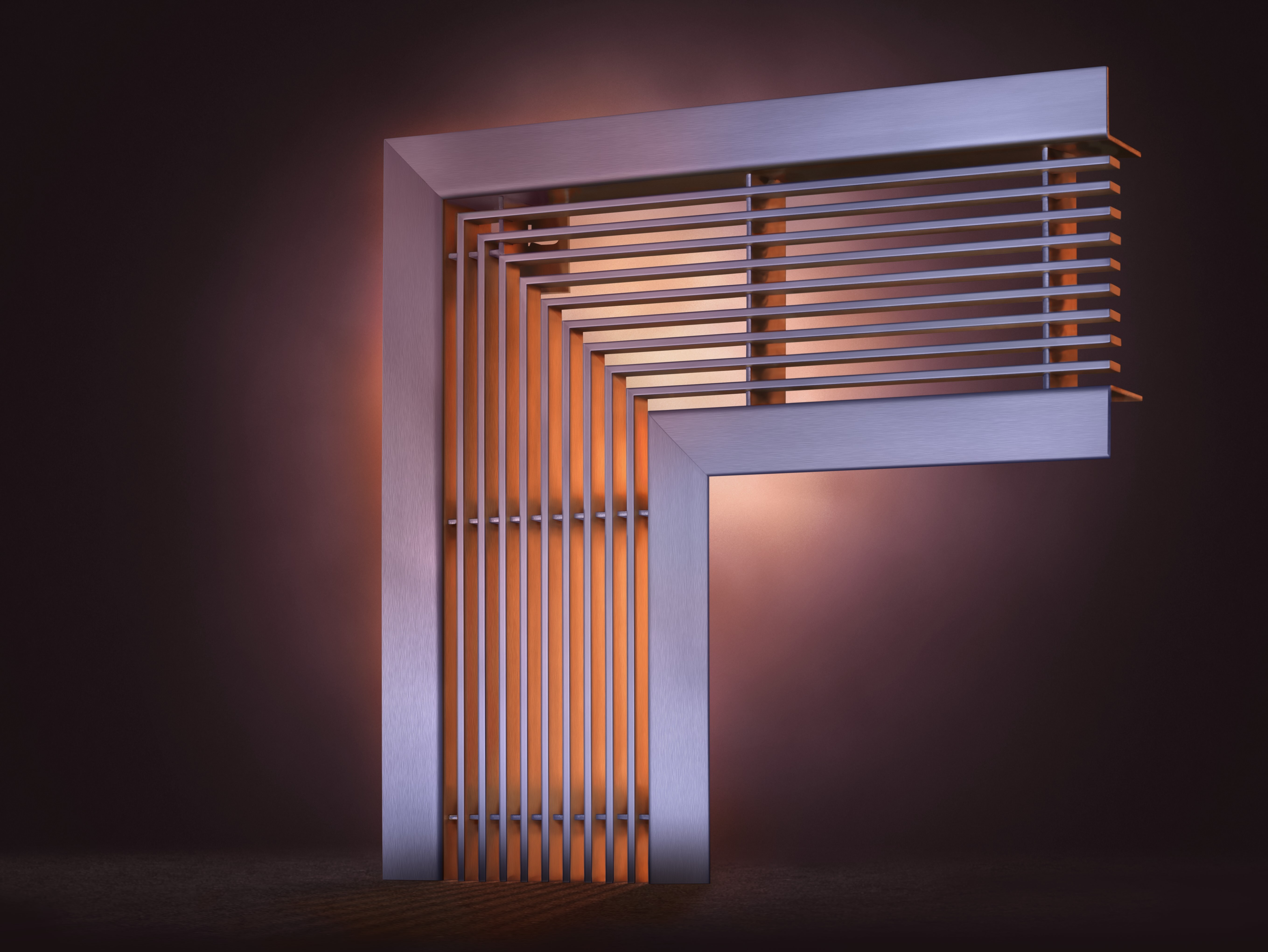
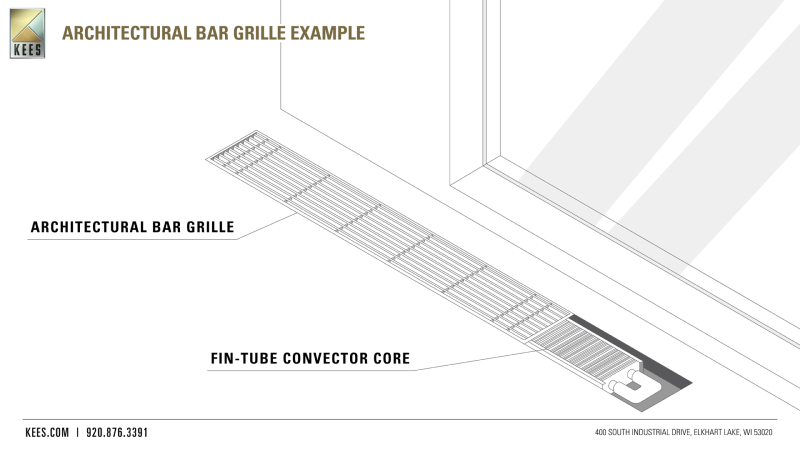
Floor-rated architectural bar grilles are air supply grilles installed in the ground in front of glass exterior walls, circulating and directing conditioned air to combat the heat transfer that naturally occurs through large panes of glass.
Specifying the right floor-rated architectural bar grille offers the following benefits:
- System Efficiency: Floor-rated architectural bar grilles deliver conditioned air in the area where heat transfer occurs, improving overall efficiency of the HVAC system.
- Safety: Floor-rated architectural grilles bring conditioned air into a space while providing a safe surface for pedestrians to walk on.
- Aesthetics: Floor-rated architectural grilles preserve the sightlines of glass walls by masking HVAC equipment underfoot.
What makes an architectural bar grille floor-rated?
Floor-rated architectural bar grilles are built to withstand pedestrian foot traffic. To qualify an architectural bar grille as floor-rated, manufacturers abide by the following guidance:
- Load Rating: Architectural bar grilles comply with load rating guidance ASME 112.6.3 from the American Society of Mechanical Engineers, which rates how much weight a grille can safely carry, based on laboratory testing.
- ADA Compliance: Architectural bar grilles are designed in accordance with the Americans with Disabilities (ADA) Standard 302.3 by limiting openings between bars to 1/2" or smaller, to prevent wheelchair castors from getting wedged in the gaps.
- Heel-Proof Design: On top of the ADA guidance, industry standards limit openings in grilles to 1/4" to prevent the average pencil, pen, or high heel from falling through.
Best practices for specifying a floor-rated architectural bar grille
Materials
Choosing the right material for a floor-rated architectural bar grille involves balancing aesthetics with cost. Common materials include:
- Painted Steel: A cost-effective material, painted in a finish of choice.
- Aluminum: A mid-cost material with better corrosion-resistance than painted steel.
- Stainless Steel: A higher-cost, heavy-duty material that stands up to repeat cleanings and outdoor elements brought inside by foot traffic.
- Brass and Bronze: Exotic materials prized for their aesthetics, offered by select manufacturers.
Air Pattern Control
Architectural floor grilles made of aluminum specifically can be manufactured with bars that alter the deflection of air from the standard upwards pattern. If a designer or engineer strongly desires it, manufacturers may be able to produce deflection bars in other materials.
Reinforced Construction
Depending on the project’s needs, floor-rated architectural bar grilles can be strengthened by thickening support bars, adding more bars, and by increasing the sleeve and bar depth.
Access Clearance
Floor-rated architectural bar grilles conceal HVAC equipment stored in shallow trenches in the floor. When specifying an architectural bar grille, sales reps should make provisions for accessing that equipment for future cleaning, inspection and maintenance.
Mounting Options
Grille Mounting Options: Options for mounting the grille to the floor:
- Face Fastener: The architectural bar grille is mounted with screws/fasteners that are visible on the face of the grille.
- Concealed Fastener: The architectural bar grille contains slots in the support bars for screws/fasteners to go in from below, hiding them from visibility. The option is popular with architects for its clean aesthetic.
Core Mounting Options: Options for mounting the core grille to the surrounding frame:
- Fixed: The core is welded in place to the frame. To access the space below the grille, the entire grille would need to be removed.
- Hinged: A section of the core is hinged, and can be lifted up to allow hand access to the space below.
- Removable: The entire core can be removed from the frame. Can be a good choice for grouted floors.
Style and Aesthetic Choices
Designers and architects choose floor-mounted architectural bar grilles for how they aesthetically enhance the surrounding environment. Therefore, the look of the grille is an important factor when specifying the right product.
Face Bar Thickness: The face bars of a floor-rated architectural bar grille can be made to a desired thickness, depending on the aesthetics of the installation.
Frame Style: The frame is the edge of an architectural bar grille. Frames come in two styles:
- Flanged Frame: Frame contains an outward flange that overlaps the floor material.
- Straight Frame/Flangeless Frame: Frame contains no outward flange and is flush with the floor. Provides a cleaner look.
Finish: The materials chosen for a floor-rated architectural bar grille can be further enhanced with protective and stylish finishes:
- Anodized: Aluminum treated for a durable finish.
- Brushed or Satin: A polished look for aluminum or stainless steel.
- Painted: Steel or aluminum can be painted to match a desired color.
- Clear Lacquer: A patina-resistant coat for brass and bronze.
Why KEES
KEES knows how important perfecting the look of a space can be. That’s why we manufacture floor-rated architectural floor grilles in unique shapes, sizes, and materials. We help architects realize their vision with grilles that curve with the floor, turn in playful S-shapes, and are made out of exotic brass or bronze material. After mastering the form, we enhance the function of bar grilles with accessories, such as opposed blade volume dampers that adjust air volume.