
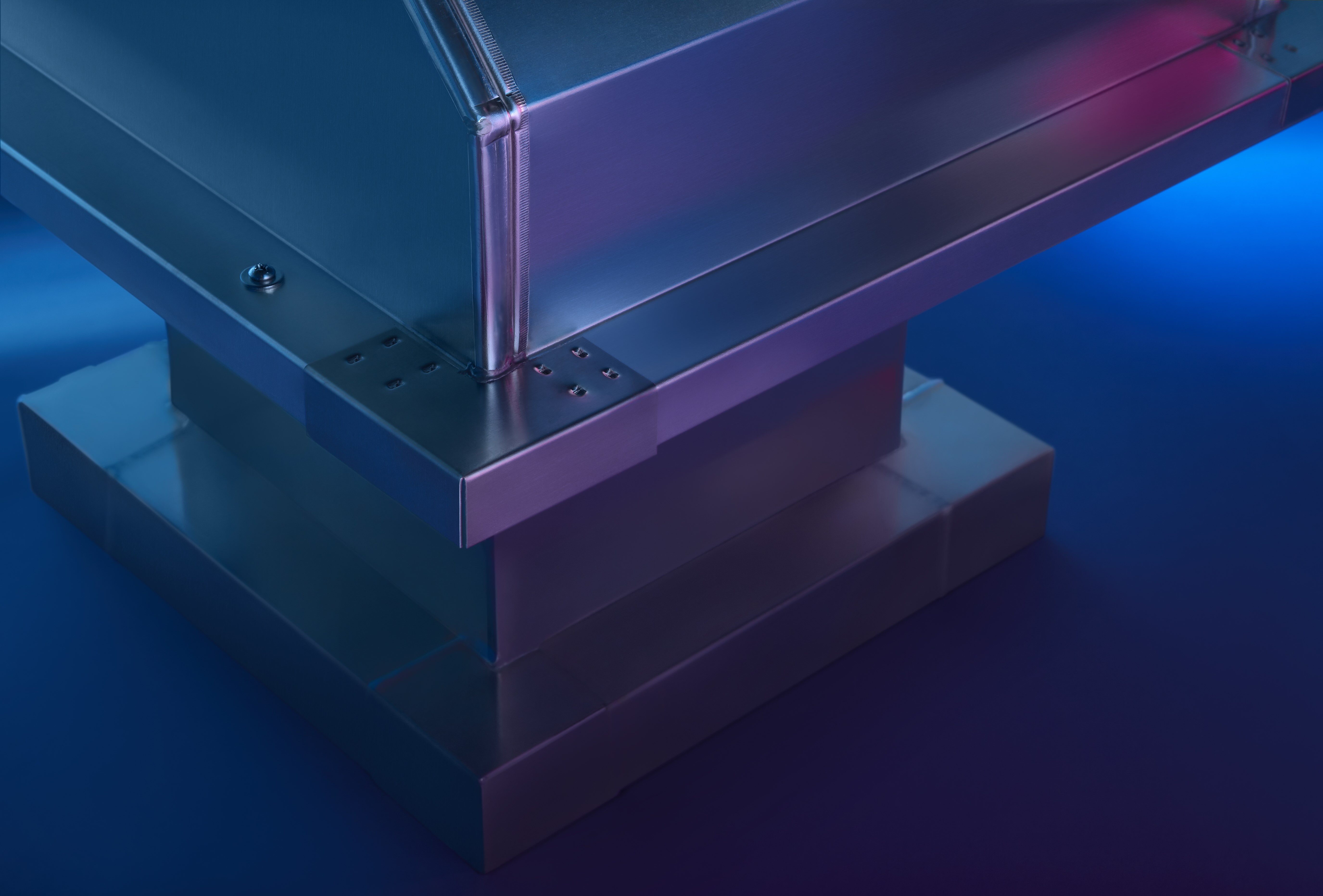
Roof hoods, also called roof vents, are protective hoods that shield ventilation openings on the roofs of industrial or commercial buildings, allowing air to pass through while keeping weather, debris, and animals out. Roof hoods protect the interior of a building from rain, snow, or winds, elements that can corrode the inside of ductwork and damage raw materials, finished products, and/or production equipment located inside. Picking the right roof hood for a location’s specific climate can help keep building interiors safe from weather damage.
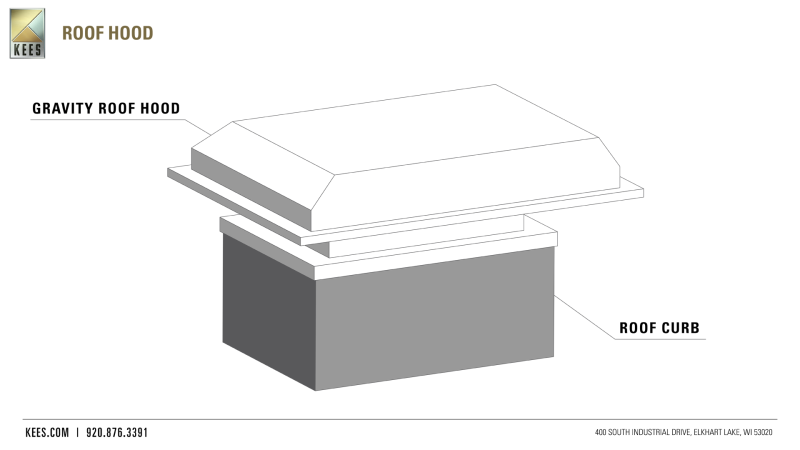
Roof hood adaptations for harsh weather climates
High wind and hurricanes
- Thicker Gauge Material: To withstand the force of strong winds, roof hoods can be constructed from thicker gauge material that is heavier and stronger than standard gauge material.
- Additional Bracing: Roof hoods can be designed with additional internal bracing that redistributes force, improving strength and stability.
- Guy Wires: For extra resistance against high winds, guy wires can be installed that anchor roof hoods to the top of buildings.
- Lower Profile: A roof hood with a lower profile offers protection from high winds that can potentially rip hoods off of roofs.
Heavy Rain
- Higher Profile: Higher profile roof hoods are further from the surface of the roof, lessening the chance that rain will bounce off the roof and be carried into the airstream.
- Oversized Cover: An oversized roof hood cover slows the speed of outside intake air, making it less likely that rain will enter the building.
- Integral Filters: Roof hoods can be built with integral filters that capture unwanted particles and moisture from outside intake air.
Snow and Cold
- Insulation: Insulation installed underneath the cover of a rood hood traps condensation, preventing it from dripping down into the building.
How to specify a roof hood for any climate
When specifying a roof hood for any climate conditions, consider the following options.
Materials: Standard materials for roof hoods include:
- Galvanized Steel: A lower-cost material that is effective against normal weathering.
- Aluminum: A medium-cost material that is more moisture-resistant than galvanized steel.
- Stainless Steel: A higher-cost, heavy-duty material, chosen for production environments exhausting chemicals or foul air.
Size: The ideal size for a roof hood depends on the volume of air going in or out. A right-sized hood will keep weather out while preserving the flow of air, while an incorrectly sized hood may invite weather in, as well as bottleneck airflow, potentially increasing utility operating costs.
Screens: Fine metal screens can be installed in the open space between the roof hood cover and the throat to prevent birds from entering the building. Even tighter mesh screens keep insects out.
Filters: A filter rack and filters can be added underneath the roof hood cover to clean outside air before it enters the building. Filters are strongly recommended for gravity-intake hoods.
Dampers: Dampers limit and control the amount of air flow coming into the hood, adding an additional layer of adjustability.
Why KEES
At KEES, our roof hoods go above and beyond with high-quality, custom construction to fit any sized opening. We offer industry leading customizability options that outfit roof hoods with the strength needed to stand up to even the harshest weather conditions.
Customizability: Need a roof hood at an unusual size or in a heavier gauge material? KEES has your back. We'll build roof hoods to meet any size, material, or airflow requirements, backed by our flexible production environment.
Expert Consultation: Specifying the right sized roof hood could mean the difference between safe, dry interior and a wet, messy disaster. The experts as KEES will help you size and select the right roof hood for any environment.
Speed: When you need something custom, and fast, look no further than KEES. We offer quick turnaround times on high-quality manufacturing as well as speedy delivery.